Saturday, August 03, 2013

Adventure stories for adults

The phrase page-turner is a highly subjective one. To some it's the single best description they can hear to be enticed to a book, while for others it implies moronic, endless-cliffhanger rubbish. And of course it can be a bit a of both. I read Child 44 earlier this year, the first 'page-turner' I've read in years, and I highly enjoyed it. Both for that longing to continue reading when each chapter ended with a twist or moment of drama, but also because it was an engrossing story. 

Most page-turners are, though, based around notions of terror and horror. How many awful-sounding novels do you see advertised on the walls of stations saying things like, "A horrific murder, a missing child, no time left... - Read the new thriller from..." and it sounds like utter rubbish. Yet these books, like those by Lee Child for example, sell by the millions and must have something to them. Yet I have no interest in reading about horrible murders or about ex-military types solving crimes where half a page is given to clinical descriptions of guns and cars.

This got me thinking, why are there no 'adventure' stories for adults? As children tales of pirates and treasure and all those sort of things were what you craved (see TinTin) and as adults, we still enjoy this - see the films of Indiana Jones or Back to the Future, but I don't know many books of this kind. Books that employ a shameless page-turning strategy, but cover adventure and escapades, without resorting to the darkest recesses of the human mind to stimulate interest.

Perhaps I'll write something, before anyone else has this idea. However, perhaps there are such books out there - if so please let me know!

Friday, August 02, 2013

A salute to Friday

Ah, Friday. Hallowed day, harbinger of the weekend, bringer forth of good times, and usually-quieter-day-at-work-than-other-days day.

Some Fridays rush up upon you, catching you unawares, some idle by, taking an age to reveal themselves, some seem days away, and some, like this week, just tick by with reassuring regularity.

Thursday, August 01, 2013

The ups and downs of escalators

I read an article the other day about the etiquette of standing or walking on escalators - let's not call it 'riding', it's not a roller coaster or a whale is it?. Apparently, in some cities, hardly anyone walks on the escalator while go-getter Michael Bloomberg said he walks up and down escalators at every opportunity.

Well, being financial titans isn't the only thing I and MBB (as his friends call him) have in common, as I too am a committed escalator walker. I love the double rising sensation of your legs being given a boost by the endlessly revolving loop of an escalator's giant silver steps. Twice as fast and half the effort. Of course sometimes I don't (see: hangovers, very early mornings) but this is rare as even in poor states I find a bolt up an escalator does you a world of good. 

It's also great free exercise and whenever escalators are out action on the underground, forcing commuters to trudge down and around spiraling staircases, it must make London a much fitter city. There should be a No Escalator Day. 

Two fun things: 1. In tube stations with two parallel escalators, take a different one each (if with someone else of course, or do it secretly with a random) and stand on steps opposite one another. Then watch to see if one goes faster than the other.  At Angel tube it used to be that one escalator was considerably faster so I'd give people six or seven steps head start and still win

2. When going up, stand (yes yes I know) and look straight up. If you do it right it gives the sensation you're at 90 degrees and the people above should be tumbling through the air towards you. It's worth practicing as it's a brilliant sensation. Waterloo is good for it. 

Of course the most importance thing in all this though is, while there is nothing wrong with standing, if you're going to, please stand on the right. 

Wednesday, July 31, 2013

The Thylacine blues

As mentioned in an earlier blog (scroll down lazy) I've been thoroughly enjoying The Sea Inside by Philip Hoare and yesterday I read a fascinating chapter in which he documents the plight of the poor old Thylacine.

This was a sort of wolf-dog marsupial that was driven to extinction by settlers in Tasmania over the start of the twentieth century in that classic way people behaved then with absolutely no forward-thinking about what they were doing - such as slaughtering animal populations or wiping out indigenous populations. 

However, you can't keep a good wolf-dog-marsupial down and the Thylacine may well have managed to survive. Hoare recounts many testimonials from eye witnesses who claim to have seen the creatures still in the wild, with many sounds highly creditable. Given the wildness of Tasmania it seems possible a few creatures could have survived against the odds and still be scavenging their way through the undergrowth.

There's some uniquely tragic about the idea humans have wiped out some animals from the face of the earth, without any one at the time really thinking, "Er, chaps, what happens when there's none them".

I hope the Thylacine makes a return in the future, with firm proof, and that it's well protected for the future. 

Tuesday, July 30, 2013

Resolution

Hey, hey, two blogs in under a week – what is this, some kind of record? (No, obviously not).

However, perhaps I will reconnect with the blog, as I miss updating it and enjoy having it as a location of digital whiteness for brain thoughts and book opinions and whatnot. I've experimented with other platforms – Posterous, Tumblr, Wordpress, and all that – but I do like Blogger – plus I've been using it since 2006 so it has all my posts and stuff on it.

I helped a friend move house yesterday – he still has his CDs – and it was sort of fun. I don't know why I find helping people move house oddly enjoyable. I think, perhaps, it just comes from the sense of easy completion – move this, to there, by this time, done. Easily quantifiable success.

It was a lovely sunset yesterday too, followed by hazy summer rain and glorious rainbows. Got some great pictures, as you can see below.


Putney Bridge at sunset


Through the hoop in Fulham

Sunday, July 28, 2013

Weary words

Oh weary worldly traveler of the internet. How did you come to these shores? How long has it been?

The internet has too many words on it. Everyday we make it heavier and heavier - it must be sagging - especially around the Facebooks and BBCs of this world, where all the news and photos sit. It'll be fine, though, they'll just keep propping it up. 

I read Revolutionary Road earlier this month as the temperatures soared. It was a strange book, I feel as though I read it as it dates, like fruit turning moldy. Some of the characters were hard to relate to, and the story line seemed laboured. Yet, there was a horrible reality to it too, the easy-to-relate-too failure of relationships and the terrible ways people get entwined and entangled without being able to unknot themselves without severing something of themselves, and the other person, in a way that'd can't be undone, or fixed.

I've now started reading The Sea Inside by Philip Hoare. Regular readers (anyone?) will remember my love of Hoare's Leviathan (stop sniggering at the back) from 2009 (was it that long ago?) and this book has a similar style, with the love of wildlife, sea, sky and, of course, whales, all thrown together in a lyrical, poetic pot of simmering beauty. I'm only a third through but already I love it. You could hate it if you dont' care for over-the-top rhapsodising but for myself, it's a joyous read.

I went to Lords for the cricket just over a week ago. I sat in a corporate box, I drank Pimms, I ate cucumber sandwiches, the English team batted wonderfully, a century was made, the Queen came for goodness sake - it was the most English day I've ever had. I rewatched the Olympic Opening Ceremony over the weekend. Ah, This Sceptered Isle.

I'm so sorry this blog is updated so irregularly an so erratically. Then again, does it matter, does anyone notice? It appears not. The internet is heavy enough.

Friday, July 12, 2013

Musicality

Hey hey, it's been months since a blog post so what about a nice bit of music to cheer us all up.


Thursday, May 02, 2013

Throw away your CDs, but keep your tapes

I helped a friend move house the other day. One of the last boxes we heaved into the back of a Zipvan (great service, very Grand Theft Auto) was a heavy lot and I asked him what was in it: “Oh just CDs,” he replied. I let go there and then, letting the whole box come crashing down:

“What the hell did you do that for?” he shouted.

“CDs?! Are you mad?” I yelled back.

Ok this bit didn’t happen, but it did in my mind, for who in their right mind keeps CDs nowadays?

With music now all digital, why would you keep plastic cases and linear notes you’ll never, ever read, when you have all your music stored in invisible digital files on your iPod, iPhone, laptop and accessible on services like Spotify? Stick it all on an external hard drive and you’re sorted.

If you must keep the discs, buy a single travel case for keeping the discs as back up, just in case.

My friend disagreed, but it got me thinking: why do people care for CDs? They have none of the aesthetic appeal of vinyl, or that lovely timbre and hiss, and none of the nostalgic appeal either. To my mind, the more beguiling, fading format is tapes.

At home we still have a car that only takes tapes and I love driving around with old random mixes (sorry record industry) that have no way of being controlled beyond a blind fast-forward/reward. Of course, I enjoy this partly because it’s a novelty and I much prefer the digital control in the modern world, but there’s much more fun to be had with tapes than CDs.

As for vinyl, lovely as they are, why anyone would buy them now is beyond me. Inheriting a collection from parents, for example, is one thing, but to actively seek out old albums in massive formats that will often scratch and be unplayable and require heavy, expensive kit to play them, makes no sense to me.

And that’s the thing about music – it should be based on cold, hard, rigid logic.

Saturday, April 06, 2013

The sound of perfection

I was listening to Simon and Garfunkel this morning - as I often do, it's excellent morning music - and Bookends came on - as it always does, it's on the album - and, for about the millionth time I thought, this really is just a perfect piece of music. The guitar, the lyrics, the pauses, the timings, the phrasings, the everything basically:


If you don't agree, well, you're wrong.

Monday, April 01, 2013

Lines on A Line in the Sand


I was lucky enough to visit Jerusalem last year for work purposes, and it’s an amazing city with an incredible history, which is still being fought over in a conflict that’s hard to fathom.

Having now visited  and seen just how close three of the major religions of the world live, it strikes me no-one will ever solve that city or reach a compromise that could bring any real ever-lasting peace.

Such thoughts were reemphasised this week when I finished A Line in the Sand by James Barr. This was an excellent piece of engrossing historical writing about the problems caused by the British and French intervention in the Middle East dating back to the eve of the First World War when two diplomats, in that brilliantly awful high-and-mighty manner of the old era of colonial dictatorships, drew a line across a map and apportioned themselves a piece of the Middle East to manage, maintain and manipulate.

Of course, as in other areas, this didn’t go as smoothly as they’d hoped, especially when the locals realised they were being had. What was even more fascinating was the rivalry between the French and the British over the years that led to endless in-fighting and even the funding of local militia to covertly attack one another, even when they were supposed to be allies during the Second World War.

The research Barr must have undertaken is mind-blowing as not a paragraph goes by without a reference to a letter, some archived minutes, a newspaper article, a diaries and other first-hand sources he scoured to tell the story in minute and revealing detail. 

At school and university there was often a surface level debate about whether history was about the fates of people or nations i.e. should you study macro or micro history. What Barr does so well is tell both in an interlinked fashion.

So we see the frontline intrigues and personalities of those who shaped the history of the region, from TE Lawrence to Churchill to Truman as the household names we know, to the local gangs and tribes people, like Avraham Stern, while also seeing explaining the wider picture from the national and local interests of numerous competing groups and how their aims affected the actions of those on the ground, and vice versa. 

Highly recommended reading.

Saturday, February 23, 2013

Walking for miles

I did the 45 miles Ten Tors challenge on Dartmoor ten years ago (yeesh, ten years). It was hard but a lot of fun and I definitely developed an appreciation of the simple pleasure of walking. Some mornings as I walk to the tube I get an itch to just walk straight past the station and keep on going, just to see what's around the corner (I know what's there, it's Wandsworth, but you know what I mean).

I never do, though, I turn into the tube and stand with all the other travellers staring out the window as we rattle into central London. It was with a mix of envy and awe then that I read The Places In Between by excellent person Rory Stewart who walked straight across Afghanistan a few weeks after the fall of the Taliban in 2002 (the same year I walked 45 miles on Dartmoor).

Of course such a walk is sheer madness, except Stewart can speak the dialect and had already walked across Iran and  India and Nepal and other nations before this leg of his adventure, so he had a bit of advantage over the wanderlust of a South West London walker.

Furthermore, the book is a brilliantly vivid, engrossing account of a trip few would ever take, or want to take, and has a lovely mix of hard, straight talking language about the people he meets and the difficulties he faces, and descriptive brilliance of the strange and inhospitable nature of the walk, the weather (lots of snow) and the sights he encounters, such as the Minaret of Jam. Even better, though, is the mix of history he weaves, revealing fascinating insights into the cultures that have shaped a nation that remains so utterly unknowable to the west.

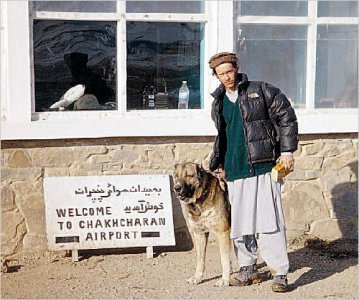
Even better, he buys a dog to walk with him, pictured above, who proves as much as a character as any of the Kalashnikov-touting, religious zealots he meets along the way. A much recommended book. And don't just take my word for it.

Sunday, February 10, 2013

Night buses, men in boats and toast-munching toads


I read Three Men in a Boat last week. It was written in 1889 and yet remains genuinely funny and relatable all these years later. There’s a bit at the start when Jerome Klapka Jerome wonders if people in the year 2000 will find their everyday trinkets of interest, value and worth. Which we do mostly. Just struck me as interesting. Apparently the book sold so well and was so popular people in other countries would put his name on books to trick people into buying them. 

Another nice aside, his publisher said, with reference to how much in royalties the book was earning for JKJ: "I cannot imagine what becomes of all the copies of that book I issue. I often think the public must eat them." Which I think is almost as funny as some of the lines in the book. The book is up there with Lucky Jim, also hilarious. 

I was sat on the night bus last night, somewhat drunk, and fell into that maudlin state of staring out the window as raindrops rolled down trying to reach some great thought, or insight or revelation that I was sure was lurking in the dim recesses of my brain. Something about life, or love or work or the like. Of course, I never captured it, if it was there at all: I think the revelation is there are no drunk-night-bus revelations to be had.

However, the event put me in mind of this wonderful excerpt from The Wind in the Willows, a far better book than any dramatisation has ever managed to capture, they all seem to cheapen and ruin it. 

“But Mole stood still a moment, held in thought. As one wakened suddenly from a beautiful dream, who struggles to recall it, but can recapture nothing but a dim sense of the beauty in it, the beauty! Till that, too, fades away in its turn, and the dreamer bitterly accepts the hard, cold waking and all its penalties.” 

My other favourite line in WITW is: 

Toad sat up on end once more, dried his eyes, sipped his tea and munched his toast, and soon began talking freely about himself, and the house he lived in, and his doings there, and how important he was, and what a lot his friends thought of him.

Thursday, January 03, 2013

The Bill Jones school of motivation


New year, new you? That’s what everyone says but few of us ever have the gumption to stick to our plans – higher, faster, stronger and all that – as often the motivation that the number 1 appearing on a calendar gives us dissipates as other numbers such as 4 and 12 and 26 start appearing.

However, one man who may be able to give us the resolve we need to stick to our motivational guns is Bill Jones, a fascinating character from the 1920s dreamed up by some advertising wonks to inspire the business folk of Britain – and later the US and Canada – to strive for greatness.

These are two of my favourites below and there’s a whole raft more on the Retronaut website. I came across this via someone on Twitter but I’ve forgotten who it was now. Sorry mysterious Twitter person – please reveal yourself if it was you and I’ll credit accordingly.


Friday, December 21, 2012

All the books I read in 2012


Regular readers (hello Mum!) will recall I write a post at the end of each year reviewing all the books I read in the past twelve months (2011, 2010, 2009). It’s an annual tradition up there with the Queen’s speech or X-Factor. For me at least. 

They're not hugely insightful or long or clever reviews, more just quick observational thoughts on each book as I go. If you have questions, ask below!

So, here we go - in chronological order:

Dark Star Safari - Paul Theroux: A great start to the New Year of 2012, as Theroux heads north to south across Africa encountering interesting people and places, moaning and evangelising in equal measure about what he finds on his way. 

His past life in Africa as a lecturer in Uganda helps, as he can access numerous high-ranking people and knows local dialects too. His disdain for many of the aid organisations he meets is also interesting; some don’t like Theroux for his moaning while travelling but I love it - it’s far more realistic than the endlessly upbeat schoolboy excited TV presenters we get these days who find everything and everyone just wonderful.

The Wonderboys - Michael Chabon: I’ve seen the film a couple of times and finding the book for £1 in Brighton thought it was worth a go and I was right. A great tale of drunken lecturers, the difficulty of writing and the idiocy of love. Recommended.

Watching the English - Kate Fox: A nice little observational non-fiction about the peculiar mannerism and social mores of us mad English people. Tad dry in places but interesting mostly.

The Tiny Wife - Andrew Kaufmann: A short, odd novel about a man’s wife shrinking. It was ok.

A Week at the Airport - Alain De Botton: I bloody loved this; a quick, light yet insightful meander around Heathrow airport by the people’s philosopher (yeah right). As someone who wanders through the bright concourses of Heathrow every so often I enjoyed learning a bit more about the people that keep the big ol’ place humming.

A Visit from the Goon Squad - Jennifer Egan: Thought this was a bit overrated but enjoyable. Never a huge fan of 'linking stories' that fuse different characters together, either subtly or obviously, but it was easy to read and better than most stabs at this type of fiction I’ve read.

The Reluctant Fundamentalist - Moshin Hamed: Enjoyed this a lot; a terse, tight novel about the growing disillusionment of a high-flying western financial expert from India who turns his back on it all for, maybe, more nefarious activities.

Jupiter’s Travels - Ted Simon: Around the world on a motorcycle is always a good premise for a book and Ted Simon’s account is excellent as he makes his way here and there across Africa, South America, North America and onto Asia and so forth. The people he meets make the book, as well as some of his excellent descriptions. He repeated the trip again later in life, although I’ve yet to read that. I may, though.

Engleby - Sebastian Faulks: The more I read of Faulks the more I like him, after finding Birdsong quite disappointing. A dark, somewhat comic novel about a disturbed chap going through life and odd events happening around him, OR DO THEY!

The Case for Working with Your Hands: Or Why Office Work is Bad for Us and Fixing Things Feels Good - Matthew Crawford: Read this on a previous blog.

A Short History of Tractor Farming in the Ukraine
- Marina Lewcyka: Terribly written story-by-numbers tripe that aspired for comic-thoughtfulness but was just crap. Hey ho.

Americana - Don DeLillo: I started reading this flying back from San Francisco and fell asleep about 30 pages in so it dropped on the floor. When I awoke the woman next to me said “no good then?!” But actually it was very good. The first 100 pages or so are the clear inspiration for Then We Came to the End by Joshua Ferris but then it veers off into some mad road-trip novel which isn’t as good but the writing is engaging and different and kept me hooked to the end.

Cosmopolis - Don DeLillo: Inspired by the previous novel picked this up (from HMV!) but wasn’t as enjoyable as Americana. They made a film of it with Robert Patterson. Somehow sums up my criticisms.

The Reader - Bernhard Schlink: I really enjoyed this (I’ve not seen the film). A beautifully constructed tale of (too) young love and the inability to escape ones past, it had that rare ability to linger in your mind long after you’ve read it. It did this with simple, plain yet highly engaging language that I found completely beguiling. Highly recommended.

The Stranger - Albert Camus: I didn’t really enjoy this; a bit too short and the main character is a strange lad.

The Hunger Games - Suzanne Collins: Popular but not all that great. A page turner but dour writing and boring characters. Still, it sold gazillons, so what do I know.

Empire - Niall Ferguson: Ferguson is a contrary character it seems but I really enjoyed this thorough exploration of the Empire from its inception to its demise. It was great to learn so much more about a period of history that looms so large in the past of us Brits but yet we (for the most part) know so little about.

One Day - David Nicholls: Someone lent this to me to read and I can’t deny it had a certain basic charm but why it proved so popular is beyond me. Quite boring characters act idiotically for years on end blatantly in love but without ever acting upon it. I could believe this if we lived in a world without alcohol.

The Crow Road - Iain Banks: My brother lent me this and I really enjoyed it. Lyrical, insightful writing and an engrossing story with nicely realised characters with engaging personalities. I watched the BBC adaption afterwards but it wasn’t as good.

Last Orders - Graham Swift: I bought this book for 20p from the Putney Scouts outdoor stall (oh how we live in south west London) and being a big fan of Swifty I was expecting good things and I wasn’t disappointed. A moving tale of misdirected love and wasted lives. There’s a film but I’ve not seen it yet.

Touching the Void - Joe Simpson: ARGH MY LEG, he screamed as he fell down the mountain. Well, I’m going to die, he thinks. But then the triumph of the human spirit overcomes ridiculous odds and he makes it back to base camp. What a guy.

I, Partridge - Alan Partridge
: Funny throughout although the jokes wears thin after a while. A-HA!

Of Mice and Men - John Steinbeck: Lenny you idiot! Poor old boys, struggling for a living; a bleak tale.

When We Were Orphans - Kazuo Ishiguro: A disappointing effort from an author I usually love (The Remains of the Day) which starts off promisingly but ends poorly.

The Revenge of Gaia - James Lovelock: It’s enjoyable to read a proper rant sometimes and this is most definitely that as Lovelock has clearly had enough with our inability to accept the damage we’re doing to our planet and railing against it all.

Lucky Jim - Kingsley Amis: One of the my favourite books of the year with Dixon a truly brilliant character who gets involved in some hilarious scrapes surrounded by a rag-tag bunch of awful people. A treat.

Sunset Park - Paul Auster: Same old Auster - people living on the fringes of society, somehow not wanting for money, and hiding damaged pasts. As always he does a lot of Telling rather than Showing which I always thought was a big no-no in the writer’s world but he gets away with it. I got this from Putney library for free when it would cost you £17 in hardback. Libraries are great.

The Family Arsenal - Paul Theroux: A bleak, grim tale of 1970s London that I struggled to get into until I just sat and read 100 pages plus when at an airport and then suddenly really started to enjoy.

Slaughterhouse-Five - Kurt Vonnegut: A very odd novel but one of the best I’ve read this year. Vonnegut was actually in Dresden when the bombs fell and survived and this novel was his response to that but it also includes time travel, aliens and lots of death. So it goes.

A Week in December - Sebastian Faulks: Didn’t expect to like this as it does that interweaving character thing I don’t usually like (see A Visit From the Goon Squad) but actually I found very enjoyable and when it hit its satirical targets was bang on the money.

London Under - Peter Ackroyd: There’s a whole world beneath our feet in London and Ackroyd does a great job of telling us about it all in lyrical detail.

A Touch of Love - Jonathan Coe: Very odd this as it was written very basically, almost badly, but I think that was the point. It was too short to really care about the characters that much but it kept me hooked.

No Easy Day - Mark Owen: An account of the raid on Osama Bin Laden. The first 150 pages just covers Owen’s (Not his real name) time in the SEALs and other missions leading to the Big One. This was all quite boring but the raid chapters are pretty good and it was interesting to get a first-hand take on the raid. Terribly written, though.

And that’s it: well done if you made it to the end. If not, I don’t blame you; it’s hard to review 33 books in one sitting and make it interesting and insightful throughout. Bring on 2013...



Widgets